
What Is Cross-Platform App Development?
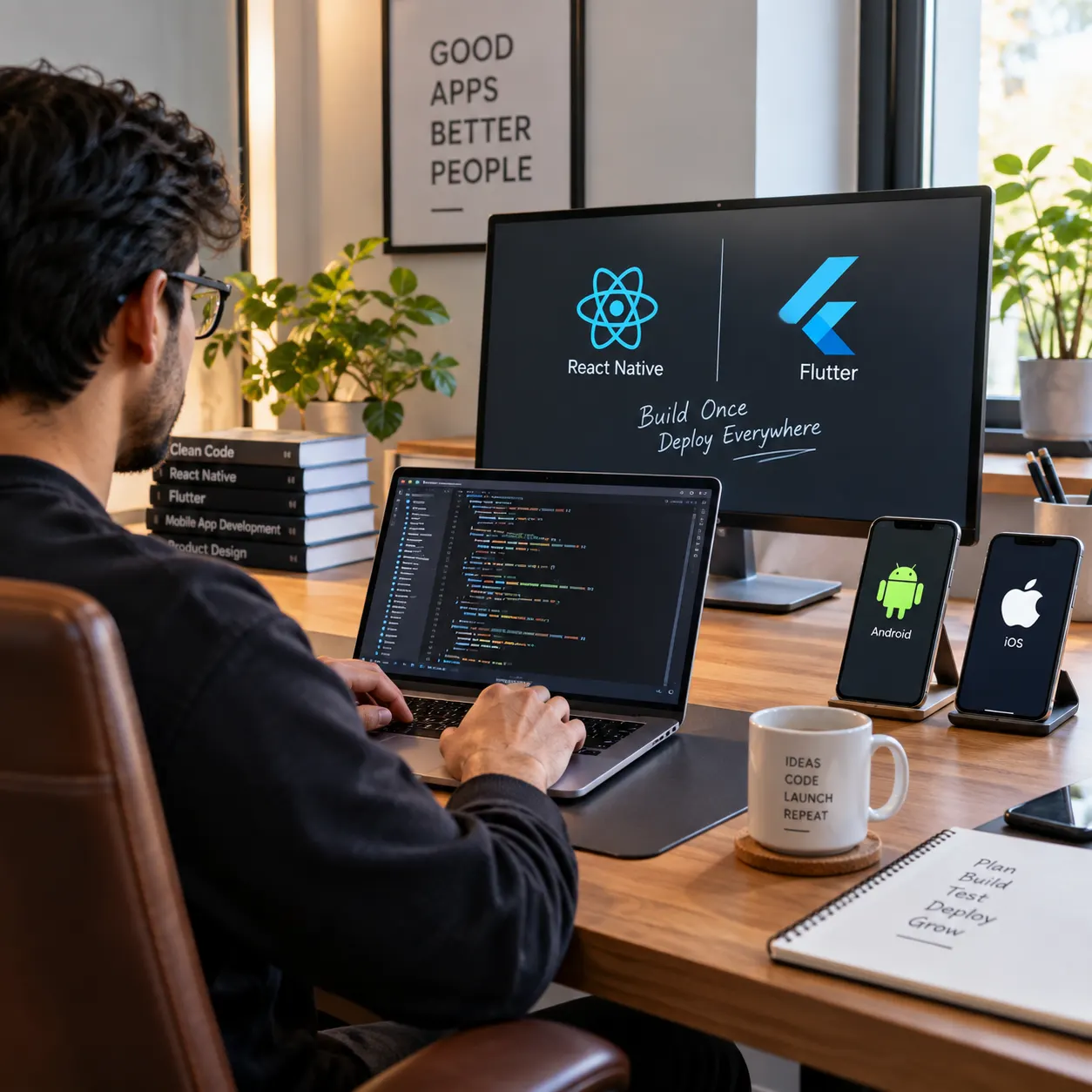
Cross-platform app development means writing an app once, in a framework like React Native or Flutter, and deploying it to both Android and iOS instead of building two separate native apps. Most of the code, often 70 to 90 percent, is shared between platforms, which typically lowers cost and shortens the development timeline compared to building native apps separately.
Why Businesses Choose Strive DigiTech for Cross-Platform Development
One codebase, two app stores. Here's what makes that work in practice.
React Native & Flutter Expertise.
Our team builds in both major frameworks and recommends whichever fits your product, rather than defaulting to one tool for every project.
One Codebase, Both App Stores.
Android and iOS versions ship from a shared codebase, so feature updates roll out to both platforms at the same time instead of twice the work.
Native-Level Performance.
Modern cross-platform frameworks compile to native components, so your app feels responsive rather than like a wrapped website.
Faster Time to Market.
Shared code and a single QA cycle typically get a cross-platform app to launch faster than building two native apps in parallel.
Cross-Platform App Development Services We Offer
From startup MVP to a scaled product on both app stores, our team covers the full build.
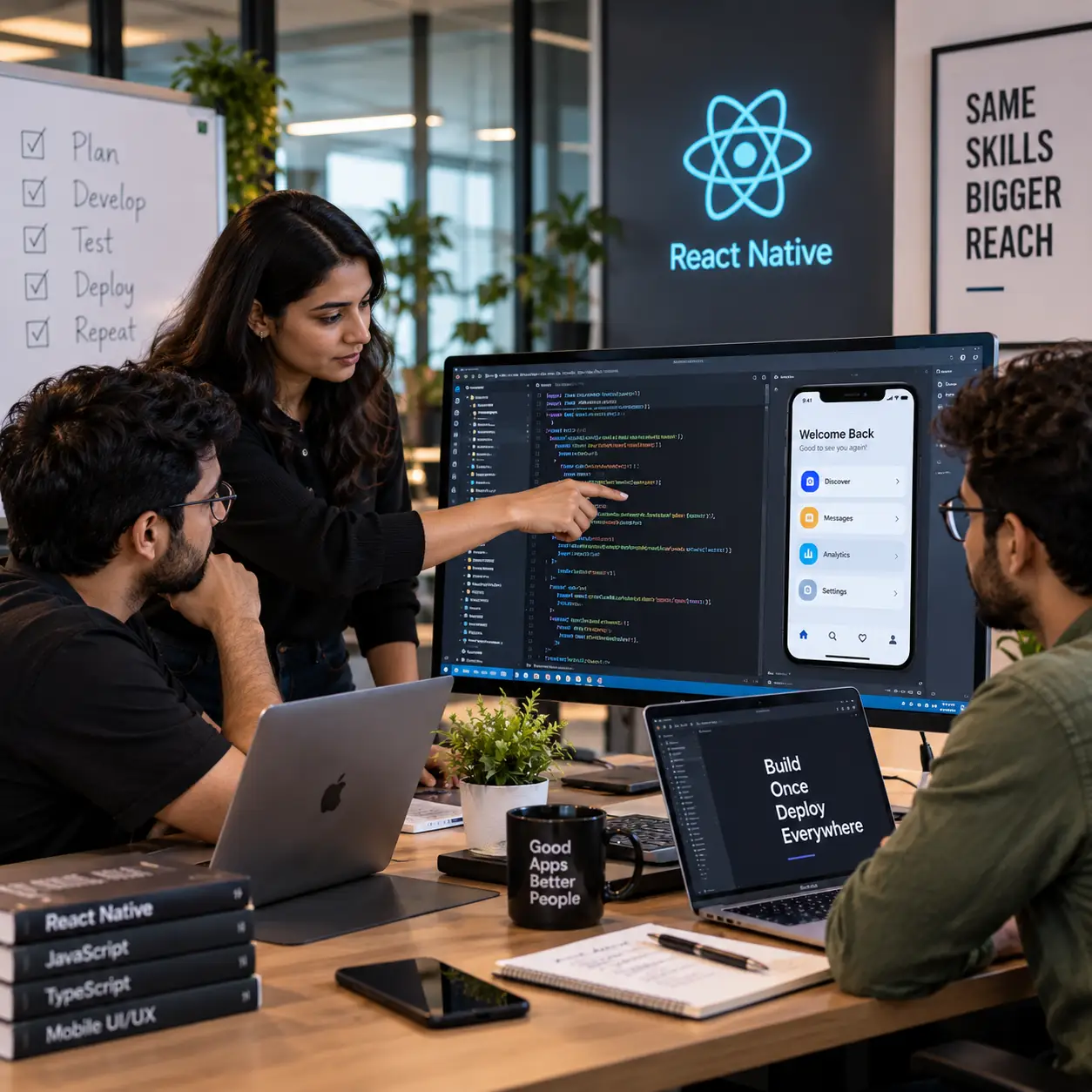
React Native App Development
Apps built in React Native for teams that want native performance with a JavaScript and TypeScript codebase.
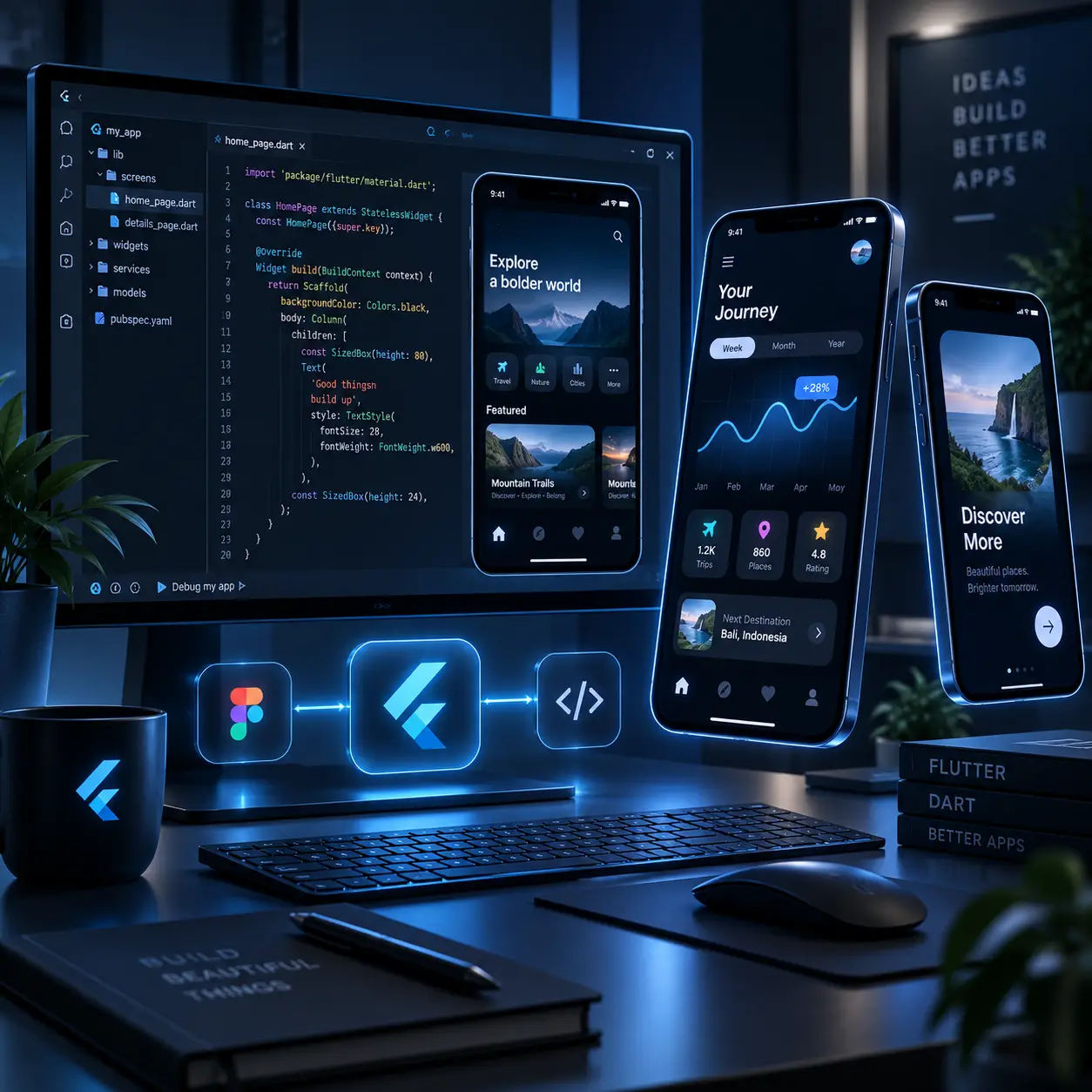
Flutter App Development
Apps built in Flutter and Dart, well suited to products with highly custom, animation-heavy interfaces.
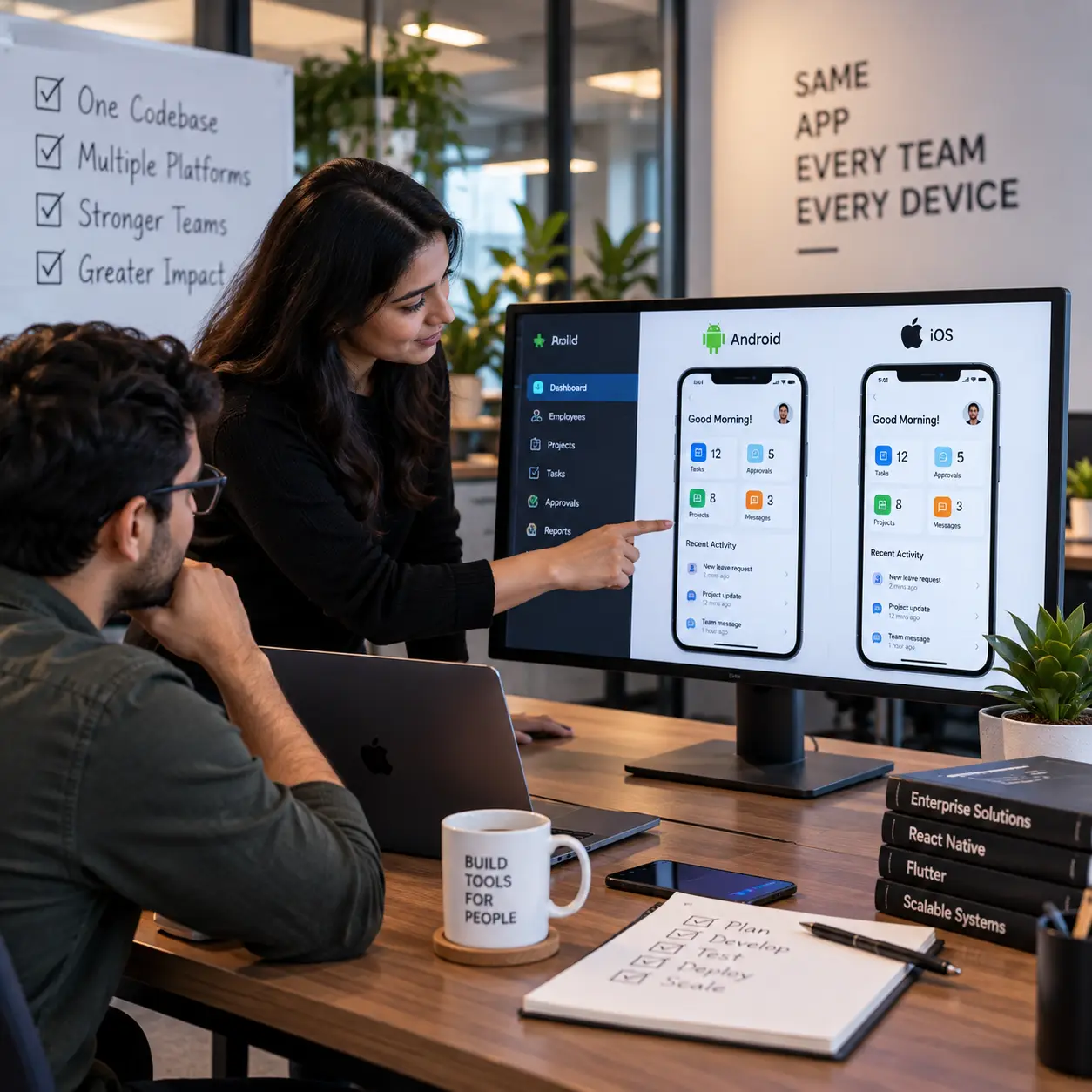
Cross-Platform UI/UX Design
Interfaces designed to feel native on both Android's Material Design and Apple's Human Interface Guidelines, not a compromise between the two.
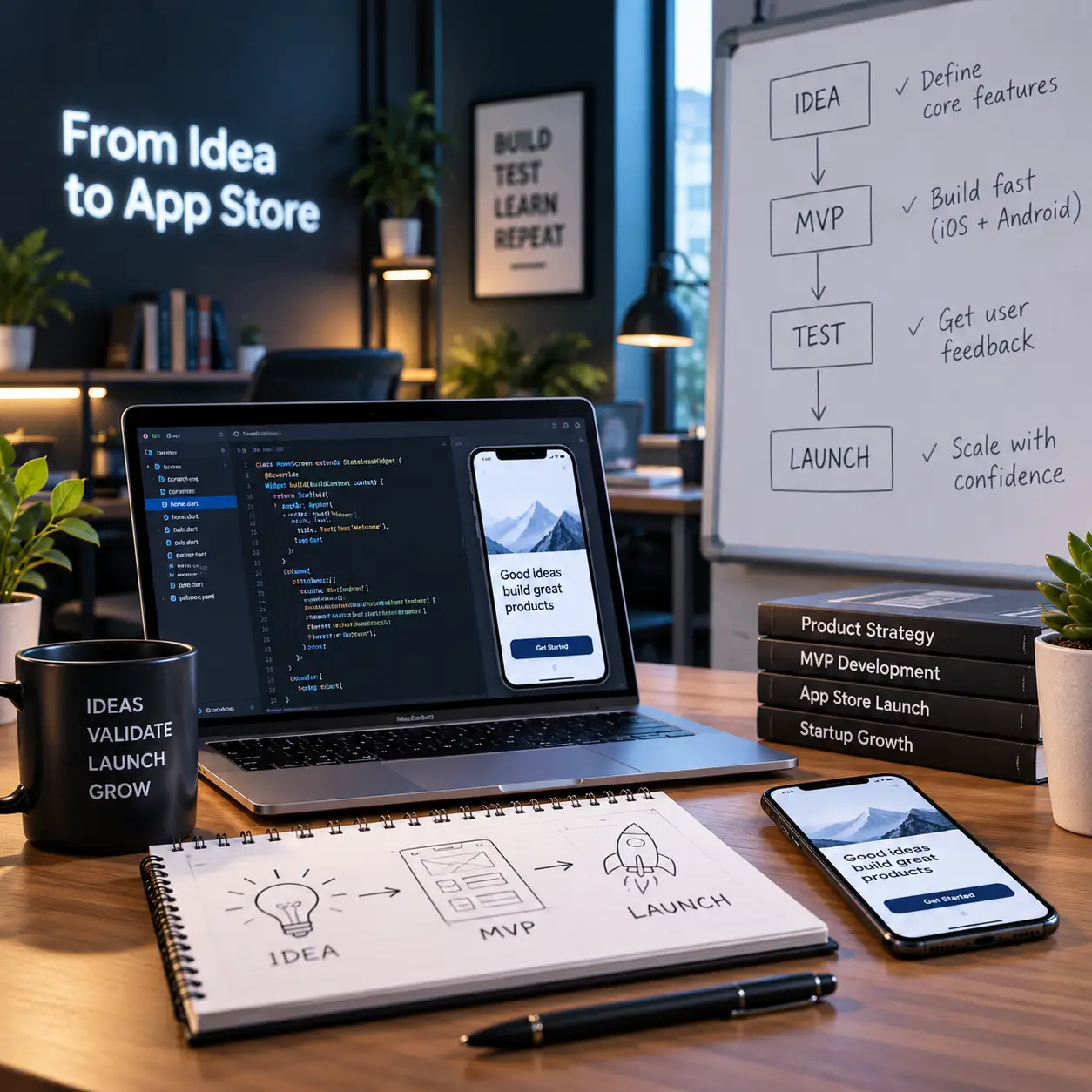
MVP Development for Startups
A lean, fast build to validate your product on both app stores before committing to a larger native rebuild.
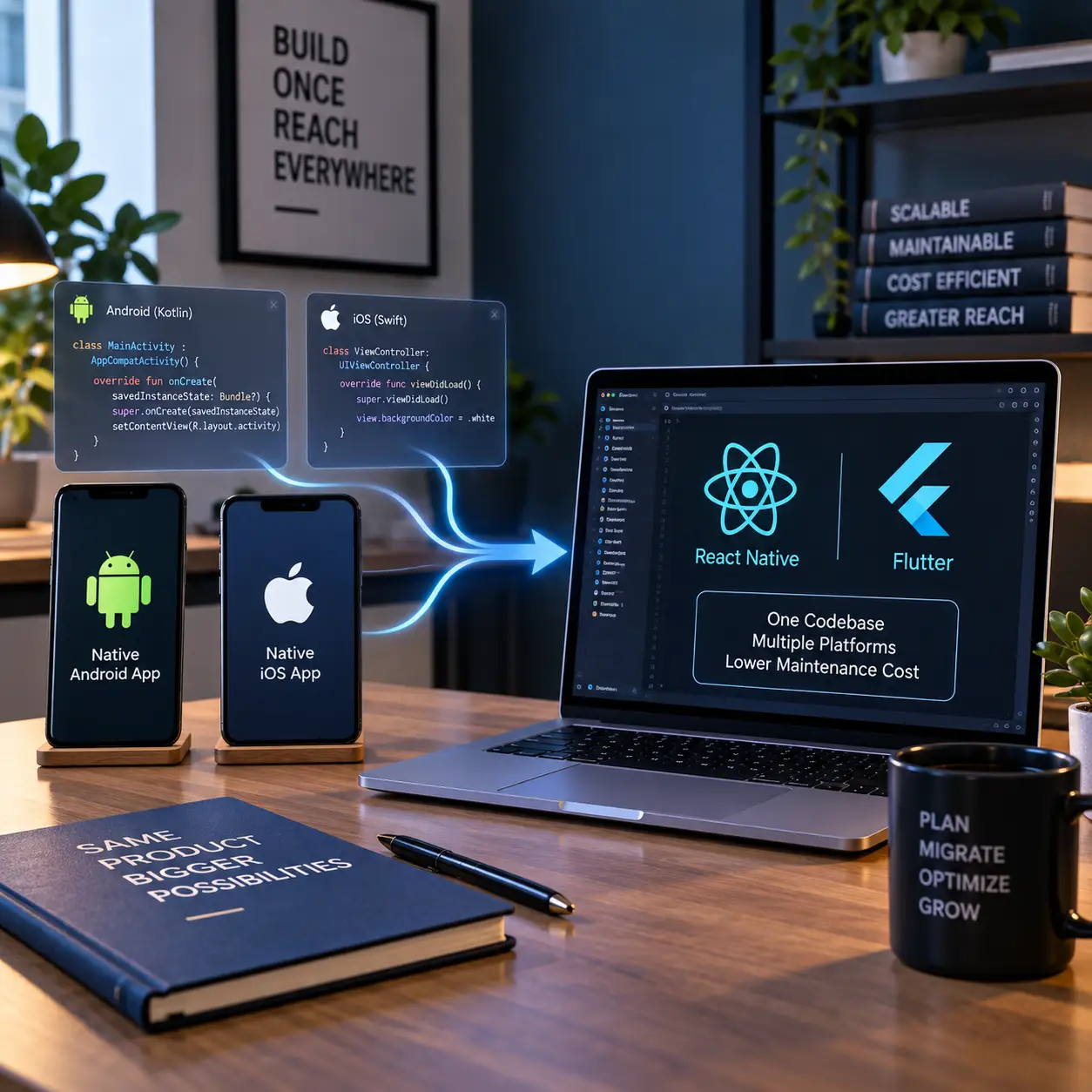
Native-to-Cross-Platform Migration
Existing native Android or iOS apps consolidated into a single React Native or Flutter codebase to cut ongoing maintenance cost.
Enterprise Cross-Platform Apps
Internal tools and enterprise apps built once and deployed across your team's Android and iOS devices.
Our Cross-Platform Development Process
Six stages, two-week sprints, and a build you can test on both platforms at every step.
step 01
Discovery & Strategy
We assess your product requirements and recommend React Native or Flutter based on your feature set, team and timeline, not a default preference.
step 02
UI/UX Design
Wireframes and high-fidelity screens designed to feel native on both Android and iOS. You approve every screen before development starts.
step 03
Agile Development
Two-week sprints building a single codebase, with builds you can install and test on both Android and iOS throughout.
step 04
Quality Assurance
Testing across Android and iOS device configurations to catch the platform-specific issues that cross-platform apps can introduce.
step 05
Dual Launch
Simultaneous submission to the Google Play Store and Apple's App Store, with store listings optimized for each.
step 06
Growth & Support
Post-launch monitoring on both platforms, updates for new OS versions, and marketing support to grow downloads.
Technologies We Use
We build with the two most mature cross-platform frameworks available today.




Cross-Platform App Development Cost in India
Sharing a codebase changes the number, but scope still decides most of it.
Cross-platform app development typically costs less than building separate native Android and iOS apps, since most of the code is shared. The exact figure still depends on feature count, design complexity, backend requirements and integrations. Strive DigiTech provides a fixed, itemized quote after a free discovery call, once your specific requirements are scoped.

Starter / MVP
$7,000 to $15,000
- Single core user flow
- Shared UI components
- Firebase backend
- Dual app store submission
Growth / Mid-Complexity
$15,000 to $38,000
- Custom UI and animations
- Backend APIs
- Payment, maps or notification integrations
- Admin dashboard
Enterprise / Complex
$38,000+
- Complex business logic
- ERP/CRM integrations
- Advanced security and compliance
- Dedicated ongoing team
Frequently Asked Questions
Straight answers to the questions we hear most from businesses evaluating a cross-platform app development company in India.
01. Is cross-platform app development cheaper than native?
Usually, yes. Because most of the code is shared between Android and iOS, cross-platform development typically costs less and takes less time than building two separate native apps, though the exact saving depends on your feature set.
02. React Native or Flutter, which is better?
Neither is universally better. React Native suits teams already working in JavaScript or wanting to share code with a web app. Flutter tends to suit products with highly custom, animation-heavy interfaces. We recommend one based on your specific requirements.
03. Will a cross-platform app feel as good as a native app?
For most business apps, yes. Modern frameworks like React Native and Flutter compile to native UI components, so performance and feel are very close to native for the majority of use cases. Apps that need deep hardware access or heavy graphics work still lean toward native.
04. Can the same team handle both logo design and animated video?
Yes, both sit under the same creative team, which is why a brand's video content tends to match its print and digital design instead of looking like it came from somewhere else.
05. How long does cross-platform app development take?
A straightforward MVP typically takes 6 to 10 weeks. Apps with custom backends, multiple integrations or complex workflows usually run 3 to 5 months.
06. When does it make more sense to build native instead of cross-platform?
When your app depends on advanced graphics, augmented reality, or deep integration with platform-specific hardware, native development is usually the better fit. We'll tell you honestly if that's the case for your project rather than defaulting to cross-platform..
Ready to grow your brand one consistent look?
Get a free consultation on your logo, print collateral, packaging, or video, and a clear quote before anything starts.